
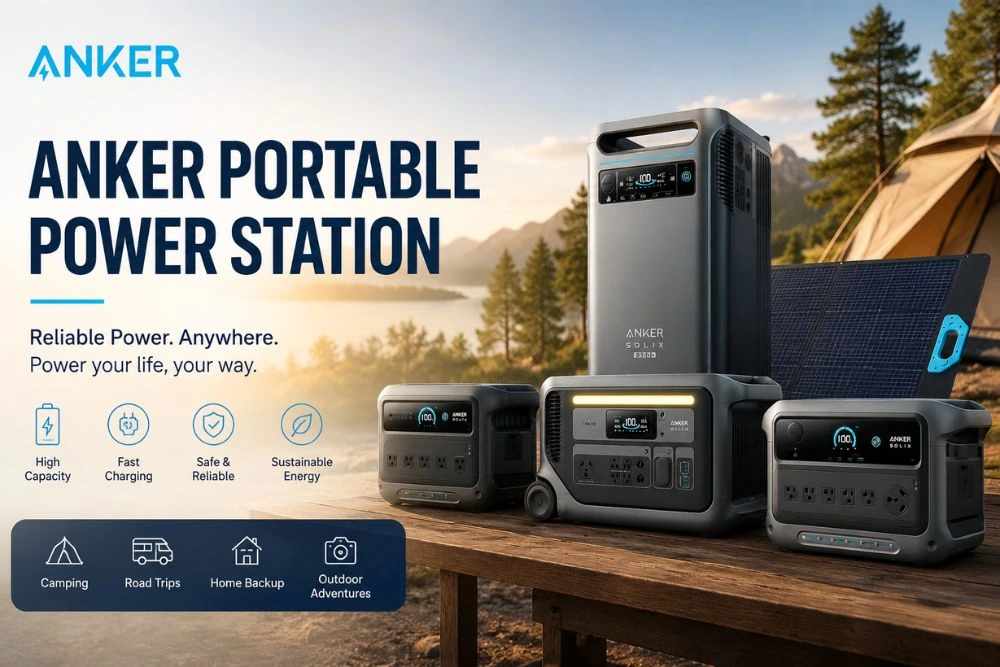
Whether you’re planning a camping trip, preparing for power outages, or looking for a reliable backup power source, a portable power station is a practical investment. These versatile devices provide clean, rechargeable power for everything from smartphones and laptops to mini-fridges and power tools.
However, choosing the right capacity portable power station can be confusing. Should you buy a 300Wh model, or do you need a 1000Wh or even a 2000Wh unit? The answer depends on what you plan to power, how long you’ll need backup electricity, and where you’ll use it.
This guide explains everything you need to know about selecting the right portable power station capacity for your needs. You can buy portable power stations from the best Anker distributor in UAE.
What Is a Portable Power Station?
A portable power station is a rechargeable battery-powered device that stores electrical energy and supplies power to various electronic devices and appliances. Unlike traditional fuel-powered generators, portable power stations operate quietly, produce no emissions, and are safe for indoor use.
They typically feature multiple output options, including:
- AC outlets
- USB-A ports
- USB-C Power Delivery ports
- DC outputs
- Car charging sockets
Many modern portable power stations also support solar panel charging, making them ideal for off-grid adventures and emergency preparedness.
Understanding Portable Power Station Capacity
The capacity of a portable power station is measured in Watt-hours (Wh). This number indicates how much energy the battery can store.
Generally, a higher Wh rating means the power station can run devices for a longer period before needing to be recharged.
For example:
- 300Wh – Suitable for charging small electronics.
- 600Wh – Ideal for camping and outdoor activities.
- 1000Wh – Great for home backup and professional use.
- 2000Wh or more – Designed for powering larger appliances and extended backup.
Choosing the right capacity ensures you have enough power without paying for more storage than you need.
Step 1: List the Devices You Want to Power
Start by identifying the devices you plan to use with the portable power station.
Common examples include:
| Device | Typical Power Consumption |
| Smartphone | 5–20W |
| Tablet | 10–30W |
| Laptop | 45–100W |
| LED Light | 5–15W |
| Camera Battery Charger | 10–30W |
| Portable Fan | 20–50W |
| Mini Refrigerator | 60–100W |
| CPAP Machine | 30–60W |
| Television | 80–150W |
| Coffee Maker | 700–1200W |
| Electric Kettle | 1000–1500W |
The more devices you plan to power simultaneously, the larger the capacity you’ll need.
Step 2: Calculate Your Energy Requirements
To estimate the required capacity, multiply your device’s power consumption (watts) by the number of hours you expect to use it.
Formula:
Energy Required (Wh) = Device Power (W) × Usage Time (Hours)
For example:
- Laptop: 60W × 5 hours = 300Wh
- LED Light: 10W × 8 hours = 80Wh
- Smartphone Charging = Approximately 15Wh
In this scenario, you’d need around 395Wh of stored energy. Choosing a 500Wh–600Wh power station provides additional flexibility and accounts for energy conversion losses.
Step 3: Consider Your Primary Use Case
Camping and Outdoor Adventures
If your primary goal is charging phones, cameras, drones, and portable lights, a 300Wh–600Wh power station is usually sufficient.
It offers excellent portability while providing enough energy for weekend trips.
Road Trips and Van Life
Travelers often need to power:
- Laptops
- Portable refrigerators
- Fans
- Camera equipment
- Small cooking appliances
A 600Wh–1000Wh portable power station is generally a better choice for these applications.
Home Emergency Backup
During power outages, you’ll likely want to keep essential devices running, such as:
- Wi-Fi routers
- Smartphones
- Medical devices
- LED lights
- Laptops
- Small appliances
A capacity between 1000Wh and 2000Wh offers greater peace of mind during extended outages.
Professional Worksites
Construction professionals, photographers, videographers, and field technicians often require continuous power for tools and equipment.
Larger portable power stations with capacities above 1500Wh are ideal for demanding professional use.
Step 4: Check the Maximum Output Power
Capacity (Wh) determines how long a power station can run devices, while output power (watts) determines what it can run.
For example:
- A 1000Wh power station with a 300W inverter cannot operate a 1000W microwave, even though it has enough stored energy.
Always verify the continuous AC output rating before purchasing.
Step 5: Think About Future Needs
Many buyers underestimate their future power requirements.
You may initially purchase a portable power station for camping but later use it for:
- Emergency home backup
- Outdoor events
- Remote work
- RV travel
- Powering additional electronics
If your budget allows, choosing a slightly larger capacity can provide better long-term value.
Step 6: Consider Charging Speed
A portable power station is only useful if it can recharge efficiently.
Look for models that support:
- Fast AC charging
- USB-C charging
- Car charging
- Solar charging
Fast recharge times reduce downtime and improve convenience during travel or emergencies.
Step 7: Evaluate Portability
Larger batteries provide more capacity but also increase weight.
If you’ll frequently carry the power station, consider:
- Weight
- Handle design
- Overall dimensions
- Ease of transportation
Finding the right balance between capacity and portability is essential.
Step 8: Look for Safety Features
Choose a portable power station with advanced safety systems, including:
- Battery Management System (BMS)
- Overcharge protection
- Overcurrent protection
- Short-circuit protection
- Temperature monitoring
- Surge protection
These features help ensure safe and reliable operation while protecting your connected devices.
Choosing the Right Capacity Based on Your Needs
| Capacity | Best For |
| 200–300Wh | Smartphones, tablets, cameras, lights |
| 300–600Wh | Camping, outdoor recreation, weekend trips |
| 600–1000Wh | Road trips, RVs, remote work, small appliances |
| 1000–1500Wh | Home backup, offices, professional equipment |
| 1500Wh+ | Extended outages, large appliances, heavy-duty use |
Common Mistakes to Avoid
Many first-time buyers make these common mistakes:
- Buying a power station based only on price
- Ignoring output wattage
- Underestimating future power needs
- Forgetting to account for charging losses
- Choosing a model without enough ports
- Overlooking recharge speed and battery lifespan
Carefully comparing features before purchasing can help you avoid unnecessary upgrades later.
Why Battery Technology Matters
Modern portable power stations often use advanced battery technologies, such as LiFePO₄ (Lithium Iron Phosphate) batteries. These batteries are known for:
- Longer lifespan
- Improved thermal stability
- Enhanced safety
- Better performance over thousands of charge cycles
If you plan to use your power station frequently, choosing a model with durable battery technology can provide better long-term value.
Tips for Maximising Battery Performance
To extend the lifespan of your portable power station:
- Store it in a cool, dry place.
- Recharge it periodically when not in use.
- Avoid exposing it to extreme temperatures.
- Use compatible charging accessories.
- Keep the battery level within the manufacturer’s recommended range for long-term storage.
Regular maintenance helps ensure reliable performance whenever you need backup power.
Conclusion
Choosing the right capacity portable power station starts with understanding your energy needs. By considering the devices you want to power, their wattage, usage duration, portability requirements, and future applications, you can select a model that offers dependable performance without overspending.
Whether you need a compact unit for weekend camping or a high-capacity solution for home backup and professional use, the right portable power station will keep your essential devices running when power is unavailable. Investing in a quality model with advanced safety features, efficient charging options, and long-lasting battery technology ensures reliable power whenever and wherever you need it.
Frequently Asked Questions
What size portable power station do I need for camping?
A 300Wh–600Wh portable power station is suitable for most camping trips, allowing you to charge phones, cameras, lights, laptops, and small appliances.
Can a portable power station run a refrigerator?
Yes, many portable power stations can power a mini refrigerator or energy-efficient household refrigerator, provided the output wattage and battery capacity are sufficient.
Is a higher-capacity portable power station always better?
Not necessarily. A larger capacity provides longer runtime but also increases weight, size, and cost. Choose one that matches your actual power requirements.
Can I charge a portable power station with solar panels?
Many portable power stations support compatible solar panels, making them an excellent option for off-grid camping, RV travel, and emergency preparedness.
How long does a portable power station last?
The lifespan depends on battery technology and usage. High-quality models with advanced lithium batteries can last for several years and thousands of charging cycles with proper care.
